
Dans les systèmes d'automatisation logistique modernes, la chaîne de convoyage de caisses CC600 d'Amsterdam joue un rôle crucial. Avec le développement constant des technologies d'entreposage et de tri, les entreprises ont des exigences de plus en plus élevées en matière de stabilité, d'efficacité et de…
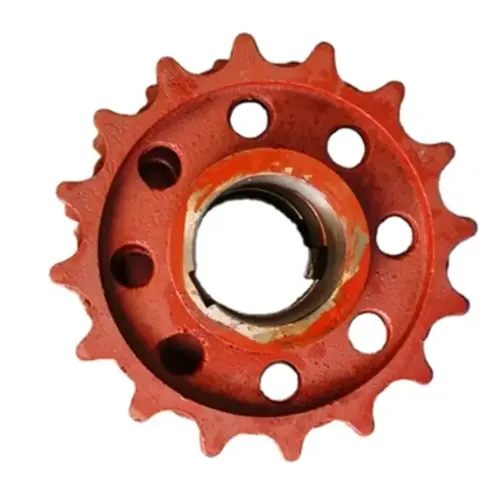
Pignon de chaudière pour éliminateur de scories de grille de feu
Parameters of Boiler Sprocket
| Paramètre | Common Values/Options |
| Type | Single/Double/Triple Strand |
| Matières | ZG40Cr, 35CrMo, 45# Steel, Alloy Steel |
| Pas (P) | 50 mm, 63.5 mm, 80 mm, 100 mm, etc. |
| Number of Teeth (Z) | 10-30 teeth (Designed according to boiler power and chain specifications) |
| Bore Diameter (D) | 30 mm, 40 mm, 50 mm, 60 mm, etc. |
| Diamètre du moyeu | Designed for load and shaft diameter |
| Largeur frontale | 20 mm, 30 mm, 40 mm, etc. |
| Traitement thermique | Quenching & Tempering, Carburizing |
| Standard | GB/T 1243, ISO 606, ANSI B29.1 |
| RPM Max | 10-50 RPM (Typical Low Speed Heavy Load) |
| Lubrification | Grease Lubrication, Oil Bath |
Selection basis: Boiler sprocket parameters should be determined according to chain specifications (e.g. pitch, width), boiler load and transmission power.
Customized requirements: Non-standard boiler sprockets may need to provide detailed drawings, including keyway dimensions, tolerances, etc.
The Basic Functions of the Boiler Sprocket
The boiler sprocket is the core component of the chain grate drive system, and its core functions include:
Power transmission and fuel transportation: The sprocket is driven by a motor or reducer, which slowly moves the chain and grate, allowing the coal to be evenly advanced from the feed end to the slag discharge end. During this process, the fuel successively undergoes the stages of drying, combustion and burnout to ensure the maximization of combustion efficiency, while the ash and slag are stably discharged from the furnace.
Motion synchronous control: The precise meshing of the sprocket and the chain ensures the synchronous operation of all parts of the grate, avoiding fuel accumulation or incomplete local combustion caused by speed deviation. This stability is crucial for maintaining the balanced heat load of the boiler and reducing mechanical wear, directly affecting the long-term operational reliability of the boiler.
In addition, the high-temperature resistant and wear-resistant design of the sprocket enables it to operate continuously under harsh working conditions, which is a key guarantee for the efficient operation of coal-fired boilers.
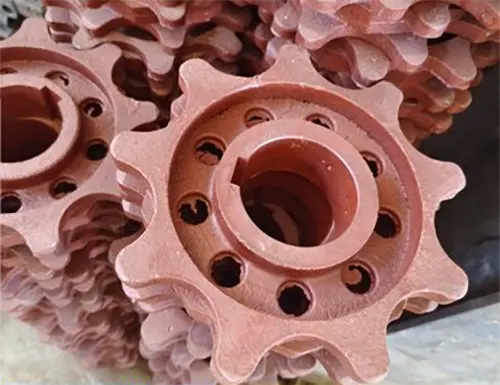
Boiler Chain Sprocket Structure and Characteristics
Boiler Sprocket Material: Usually, high-strength alloy steel (such as ZG40Cr, 35CrMo, etc.) is adopted, which is heat-resistant, wear-resistant and impact-resistant.
Tooth profile design: The tooth profile needs to be precisely matched with the chain. Common types include single-row or multi-row tooth structures. The tooth surface may undergo quenching treatment to extend its service life.
Installation method: Connect to the drive shaft through a keyway or flange. Strict alignment is required to avoid uneven wear.
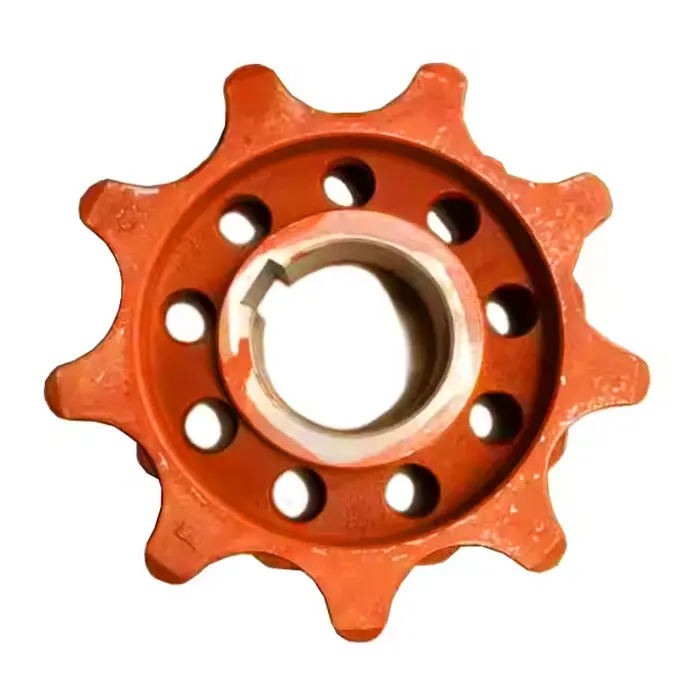
How to Replace a Boiler Sprocket?
The boiler sprocket is a key component in the boiler transmission system. After long-term use, it may wear out or be damaged, affecting the operational efficiency of the equipment. The following are the basic steps for replacing the boiler sprocket.
- Turn off the power supply of the boiler
Make sure the boiler is completely powered off and wait for the equipment to cool down to avoid scalding or electric shock. - Ouvrir le capot de protection
Carefully remove the protective cover at the sprocket part to expose the sprocket and the transmission system. - Loosen the chain or belt
If the sprocket is connected to a chain or belt, first loosen the tensioning device and remove the chain or belt. - Remove the old sprocket
Use an appropriate tool to remove the bolts or nuts that fix the sprocket, and gently take the sprocket off the shaft. - Inspection et nettoyage
Check whether there is any wear or impurities in the bearings, shafts and other parts, and clean them. Apply lubricating oil when necessary. - Installez le nouveau pignon
Align the new sprocket and install it on the shaft. Tighten the fixing bolts to ensure a firm installation without any offset. - Reinstall the chain or belt
Reinstall the chain or belt back to its original position and adjust the tension to an appropriate level to ensure normal operation. - Restore and test the equipment
Install the protective cover properly, power on and start the boiler, and observe whether the sprocket operates smoothly and if there is any abnormal noise.
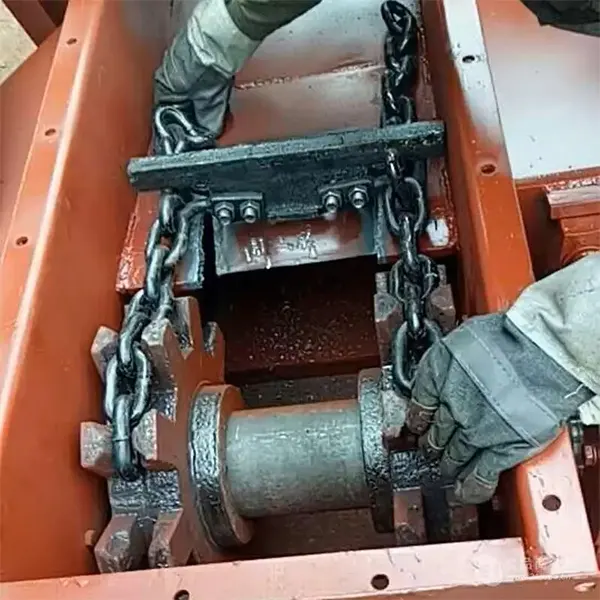
Sprocket Maintenance for Boilers
As an important component of the boiler transmission system, the sprocket's operating condition directly affects the working efficiency and service life of the boiler. To ensure the stable operation of the boiler system, it is crucial to regularly maintain and service the sprocket. Here are the boiler sprocket maintenance tips.
-
Nettoyage régulier
After long-term operation, the surface of the sprocket is prone to accumulate dust, oil stains or impurities. It is necessary to clean it regularly with a clean cloth or brush to avoid impurities accelerating the wear of the sprocket. -
Check the wear condition
Regularly check whether the teeth of the sprocket are worn, cracked or deformed. If any abnormality is found, replace it in time to prevent transmission failure and equipment failure. -
Lubrification et entretien
Lubricate the sprocket and chain with special lubricating oil to reduce friction and extend service life. The lubrication frequency should be adjusted according to the usage frequency and environmental conditions. -
Vérifiez la tension
Improper tightness of the chain can affect the operation of the sprocket. It is necessary to regularly check the tension of the chain to ensure that it is neither too tight nor too loose and operates smoothly. -
Contrôle des fixations
Check whether the bolts fixing the sprocket are loose and ensure that the sprocket is firmly installed on the shaft to prevent it from falling off or slipping during operation.
Through regular maintenance and inspection, not only can the failure rate of the sprocket be reduced, but also the overall performance of the boiler can be improved and the service life of the equipment can be prolonged. Maintenance may be minor, but security guarantee is significant.
Blogs mis à jour
Structure et caractéristiques de conception des pignons des convoyeurs à raclettes
Cet article explique et analyse principalement les caractéristiques de conception structurelle du pignon en fonction de son rôle dans le convoyeur à raclettes, ce qui conduit à la nécessité de rechercher le matériau et la technologie de traitement du pignon et les aspects techniques clés...
Normes de mise au rebut et de remplacement des pignons de levage des palans électriques à chaîne
La mise au rebut et le remplacement du pignon de levage du palan à chaîne constituent un enjeu de sécurité majeur. Le pignon de levage est un composant essentiel du palan électrique. Une fois hors d'usage, il doit être remplacé rapidement afin de garantir...